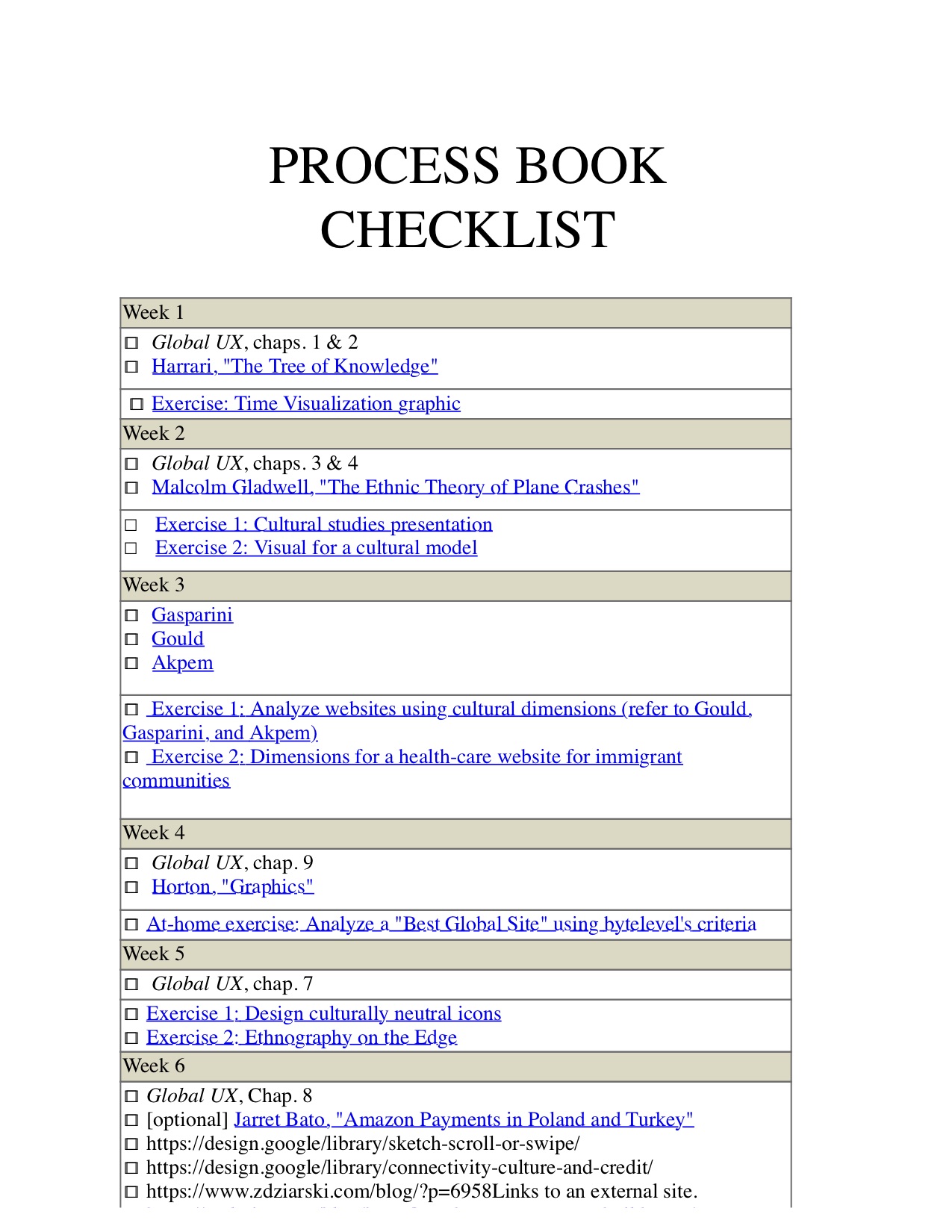
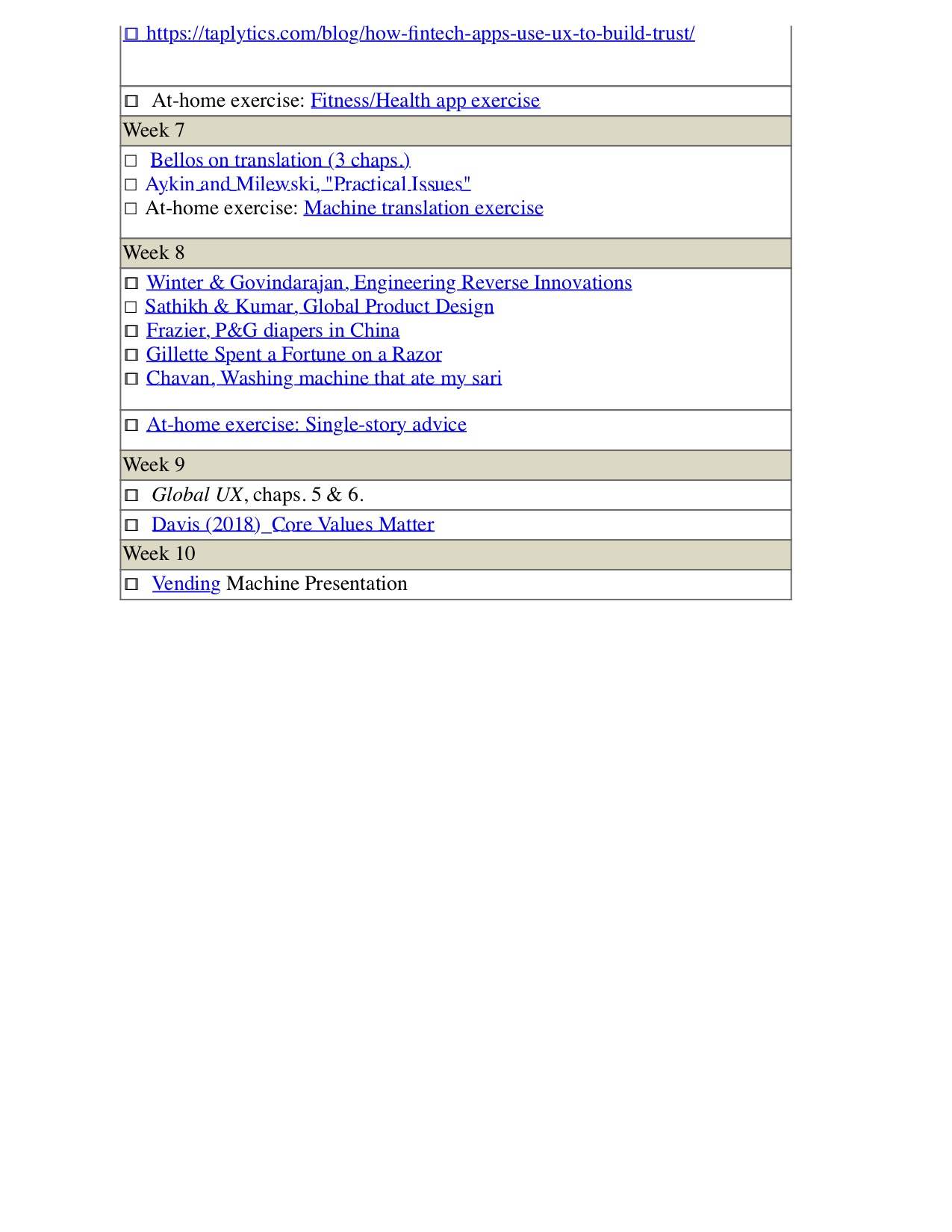
I used this checklist to make sure I included each component. The in-class exercises may appear in the following week than listed in the checklist.
My reflections on weekly readings and lessons for HCDE 512: International User Experience
I used this checklist to make sure I included each component. The in-class exercises may appear in the following week than listed in the checklist.
Theme: cross-cultural teams
Global UX, ch. 5
“An organization’s culture both reflects and influences the policies, practices, and processes that are followed by individuals and work teams in an organization.”
I have definitely experienced this at OfferUp during my internship. The company’s values are reflected in everyday work life (interactions with employees, employees themselves) and influence how employees approach their work. OfferUp has 3 main values: driven, neighborly, and adaptable. Each employee at OfferUp demonstrates at least one (if not all) of these values, and I believe that leads to how employees are able to exemplify the company’s values and create a great company culture.
Global UX, ch. 6
About time difference: “This move to make everyone more equal pays off in better working relationships.”
I haven’t worked for a global company yet or for a team that has members all over the world. This perspective of making everyone more equal regarding to when to schedule meetings with various time zones is worth considering because it can be easily missed if you’re only thinking about yourself/your day/your schedule.
Global UX, ch. 6
“Another way that teams come together is through individuals who can act as a bridge between different cultural groups.”
I think being a cultural bridge would be such a unique and exciting opportunity.
Meredith Davis, Core Values Matter
“Research shows that quality, reliability, and transparency are the core values people around the world feel are most important for brands to embody. Honesty and authenticity are particularly important to younger audiences.”
I find it interesting to be reading about the values people care about. This past week in my Theoretical Foundations in HCDE class we talked about values in design, and related theories on this topic that have contributed to HCI. A common theme in these readings is that each person has their own values, and sometimes values among stakeholders (direct and indirect) differ, so we need to consider these different perspectives and think about how can we cater to these different values (weigh out importances, etc.) or how we can create a system that can be adaptive to these values.
I wanted to research more about global teams and found this medium article: https://uxdesign.cc/handling-a-global-ux-team-taking-the-bull-by-its-horn-a73bd1b3d957
This article is about how the author bootstrapped a global team of UX designers. He provides examples from this work to what he calls his six essentials when working with remote teams: cultural divide and design culture, team engine, collaboration, peer-review mechanism, and team language.
I connected the “Core Values Matter” reading to an article I had read recently about “data violence” and cultural harm written by Anna Lauren Hoffmann, an associate professor in the iSchool here at UW. “Core Values Matter” talks about how consumers view brands and companies, and how what a company does can affect relationships with consumers. I’m connecting these two readings because I believe incidents of data violence and cultural harm can affect a company/brand, and if the company doesn’t bother to acknowledge their mistake or strive to be better and change the way they approach projects, then what values do they uphold? How can consumers ever trust them again? https://medium.com/s/story/data-violence-and-how-bad-engineering-choices-can-damage-society-39e44150e1d4
Hoffmann describes “data violence” as unintended consequences of biased datasets, unfair algorithms, and researchers constantly reproducing ideas that are harmful to vulnerable populations and communities which end up reinforcing injustices. Hoffmann quotes J. Nathan Mathias: “To evaluate the risks or benefits of an algorithm, we need to study its impact in people’s lives, whether in controlled lab conditions or in the wider world.” She suggests a variety of ways to fix this reoccurring issue such as having diverse employees, asking questions about assumptions and who’d be impacted by these assumptions, and engaging with these communities to listen to them and gain a better understanding about them.
I want to make sure I instill values into the work I do that take into consideration all stakeholders whether direct or indirect.
I also hope that I get to work in a cross-cultural team sometime in my career.

Theme: developing for emerging economies
Growing up my parents would reiterate various stereotypes regarding white people and black people to my siblings and me. One thing they repeated about white people are how white kids grow up disrespectful towards their elders (talking back, acting out, etc.). Things they repeated about black people are about how they’re scary. What enriched my understanding regarding these stereotypes was becoming friends with people of different backgrounds than me, learning from them about themselves and their backgrounds, and trying to understand their backgrounds through listening and empathy. By becoming friends with people different from myself, I get a snippet of them and how that changes my views on these stereotypes. Albeit, at times I do witness incidents similar to what my parents have stated, but just because it happens with one person doesn’t mean it applies to all.
During the group activity in class, we talked about different stories our parents have told us. Interestingly enough the three of us (who come from different backgrounds) have heard similar things regarding white people and black people from our families. We each agreed that in order to understand perspectives of others different from us we need to talk to them and try to gain a better understanding than by placing judgment.
Amos Winter and Vijay Govindarajan, Engineering Reverse Innovations
“Products for emerging markets must provide 100% of the performance at 10% of the price.”
This quote sounds like common sense, but reading this article made me realize that multinational companies try to cut corners in design. This idea of taking out some features to make a product cheaper without truly understanding the users in these emerging markets is not user-centered design.
Sathik & Kumar, Global Product Design
“In the first instance, washing machines manufactured by Haier Corporation in China, based on a ‘global’ design definitions were not being used for washing clothes, as one would expect, in remote regions of China. Instead, they were being used to wash potatoes, fruits and vegetables, besides clothes (Ho 2003).”
I pulled this quote specifically because it makes me think of my family home. When my childhood home was renovated, my parents installed a dishwasher, but instead of utilizing its actual purpose, my mom uses the dishwasher as an extra storage space for containers, pots, and pans. I didn’t think of this as transitive culture, but in terms of this paper, it would be one example.
Chavan et. al, The Washing Machine That Ate My Sari – Mistakes in Cross-Cultural Design
“Affordability is a double-edged sword,. Lo barato sale caro, goes the saying in Latin America—“what is cheap ends up being expensive.”
This reading talked about emerging markets and price points. It’s similar to a theme brought up in “Engineering Reverse Innovations” about designing a product to sell at a fraction of the cost. It seems that designers didn’t do research into pricing and shopping behavior. This might be something to consider when designing a product for a different country: look into people’s attitudes about price, quality, and affordability.
Chavan et. al, The Washing Machine That Ate My Sari – Mistakes in Cross-Cultural Design
“Successful design for emerging markets, on the other hand, requires radical innovation.”
This makes me think that we should think outside of the box when it comes to creating products for an emerging markets. Instead of turning to traditional design methods, we should utilize other design research methods to capture a better understanding of this market.
Mya Frazier, How P&G Brought the Diaper Revolution to China
“Delight, don’t dilute.”
Short and simple UX tip when it comes to a multi-national company designing for an emerging market.
Gillette Article
“To successfully sell products overseas, particularly in developing markets, companies must tweak them so they’re relevant to the people who live there.”
We need to consider the users as well as understand their culture, experiences, and how they do things. We can’t just take users that are close to us who are the same ethnicity as the users in the emerging market and assume that the users close to us will have the same experiences.
I never heard the term reverse innovation before this week’s reading, so I wanted to learn more about it. I found this article that contains a definition and examples of reverse innovation: http://www.casestudyinc.com/reverse-innovation-definition-and-examples.
The examples help me understand this concept better. Companies build for emerging markets first then expand. I didn’t know that Vicks Honey Cough was produced for Mexico first!
Tip #5 in “Engineering Reverse Innovations” reminded me of the Microsoft Inclusive Design Toolkit. This article by Margaret Price promotes the idea of a persona spectrum (explained below) and the Inclusive Design Toolkit. (Margaret Price was a guest lecture for my HCDE 508 class last spring). https://medium.com/microsoft-design/kill-your-personas-1c332d4908cc
In their toolkit, there are different cards with types of constraints, and these cards can be used when brainstorming design. This allows one to get creative in thinking of a design solution that meets these constraints like the wheelchair example in the “Engineering Reverse Innovation” reading. There is also the idea of persona spectrum versus just the persona. This persona spectrum looks at 3 types of persona: permanent, temporary, and situational. This persona spectrum is in line with constraints. You design for the permanent, but it can benefit the temporary and situational.
Critique: It was hard for me to take away any lessons in the “Global Product Design” paper because I kept getting distracted by how it was poorly written. I appreciated being introduced to the idea of transitive culture as well as examples, but I had to do double takes throughout the paper because of poor writing.
It was funny to see “mms” and “sms” in a reading. These are phone terms I haven’t heard in a long time.
In the P&G Pampers reading, there was this sentence “…something Roberts has done in dozens of countries, including Germany, Russia, and Jakarta.” Jakarta is not a country; it’s a city.
I actually read the Gillette article twice last year, so I was highly familiar with the problem and what they did to create a better fitted product for the emerging market. However, it was nice to read other examples that made similar mistakes to Gillette. You would think these stories would be viral and that multinational companies would learn from them, but I guess making mistakes is the best way to learn.
Think outside of the box! Get creative! What may seem like a great solution might not be the solution at all.
Theme: translation/localization
Activity 1: Values
Looking at this list of values, it really is hard to pick one, and since I can only pick one, I’m picking optimism. When I think optimism, I think of being an optimistic person – a person who has a positive attitude towards life and always thinks on the brighter side. I find this important because I truly believe that positive thinking makes a difference in how life feels at the moment. When I find myself becoming negative or pessimistic, it just feels like the whole world is against me. It feels like I will reach my breaking point at any moment; however, when I’m in an optimistic mindset, it feels like there are endless possibilities out there, good vibes all around, and like nothing can stop me. [insert song lyric: nothing can stop me, I’m all the way up] When I’m optimistic, I tend to be a cheery, bubbly person, and the close people in my life can vouch for that. I laugh and smile a lot, and it influences my surroundings. Close friends have told me that I’m optimistic and a positive person, and when I hear that, it makes me smile. They value that part of me because it is one of the things I bring to the table. Positivity to me is not only just the immediate surroundings but can be the future as well. When I applied for internships, I tried to remain as optimistic as possible. Sure, when the rejections came in, it brought me down, and there was a point where I thought “What’s the point?” However, when I let go of those bad feelings and went back to a happy place, opportunities started coming my way. Optimism is a value I believe in and will continue to be my aspiration through life.
Activity 2: Ads (jewelry commercials) and Values
For the machine translation exercise, I’m choosing a poem that’s in Bahasa Indonesia. I just want to preface that my Indonesian translation is a little bit rusty.

The word for word translation by Google Translate is correct. However, the meaning is totally gone, and when you read the English translation, it doesn’t make any sense. The poem contains two metaphors that didn’t translate over from Bahasa Indonesia to English.
This poem is about love and how one wants to express that love. As I mentioned there are two metaphors in this poem; those metaphors demonstrate how one wants to express their love. Google Translate didn’t get that at all. Let me use the first verse of the poem as an example. The actual translation should be “I want to love you simply; with words that the wood did not have a chance to utter to the flame that turned it into ash.”
The translation can be improved if it took into consideration the meaning it’s trying to convey. It needs to not just look at each word but try to understand what is being conveyed. This is something that would be hard to do with a machine because you would have to teach a machine how to understand context, emotion, and empathy.
I don’t think an MT machine would ever be able to get a correct translation because it requires knowledge of context as well as an understanding about human emotion. As much programming as there is today, it will require complex AI that is currently not available and may never become available.
David Bellos, Is That a Fish in Your Ear? (p. 159)
“The observation was generalized into a theory: insofar as the formal properties of different languages are different from one another, each of the world’s languages gives access to a different mental world.”
I don’t know much about the history of language or research into language, but this is intriguing to read that there is a theory regarding how languages can give insight to different cultures. As Bellos later adds in that paragraph sees the diversity of languages a treasure chest giving insight to different ways of thinking.
David Bellos, Is That a Fish in Your Ear? (p. 166)
“The diversity of tongues is a treasure and a resource for thinking new thoughts.”
Growing up, my parents always expressed how knowing more than one language can be useful especially when it comes to finding jobs. They valued multilingualism and enrolled my brothers and I into Mandarin school many times. Unfortunately, the Mandarin never stuck because we had no one to practice speaking Mandarin with. However, I am grateful that I can understand and speak Bahasa Indonesia.
David Bellos, Is That a Fish in Your Ear? (p. 169)
“What distinguishes translating up and translating down is this: translations toward the more general and more prestigious tongue are characteristically highly adaptive, erasing most of the traces of the text’s foreign origin; whereas translations down tend to leave a visible residue of the source, because in those circumstances foreignness itself carries prestige.”
This is an interesting way to describe translation from one language to another. I never thought of translation as one language having prestige over another, but Bellos’ explanation is clear and helps me understand this concept.
David Bellos, Is That a Fish in Your Ear? (p. 205)
“A truly dominant language that has a great army and a well-filled treasury behind it…is the one tongue from which you do not ever need to translate.”
Again, this is something I never really considered. Very interesting!
Aykin, Practical Issues and Guidelines for International Information Display (p. 23)
“The lack of a one-to-one relationship between countries, languages, and scripts means that designers must consider both language and country as potential determinants of design.”
This is something I haven’t considered because there are countries that have multiple languages or dialects of languages such as China and Indonesia, and these languages need to be taken into consideration when designing locally.
Cultural Substitution
As I mentioned earlier, I am not super familiar with the history of language and translations. Bellos mentioned cultural substitution, so I wanted to learn more about it. I found a presentation that is a case study on cultural substitution from English to Thai.
https://prezi.com/y1smbucukvvg/an-analysis-of-cultural-substitution-in-english-to-thai-tran/
What was done was a comparison on translated texts between the original English text and the translated Thai text on various topics to find any instances of cultural substitution. One cultural substitution example was God in the English text was changed to The Lord Buddha in the Thai text. Types of cultural substitutions found in the translations were based on religion, people (names), objects, places, measurements and time, food, idioms, animals, and proverbs. It’s interesting that these substitutions were made to fit the Thai culture instead of just using literal translations.
Pivot Languages
I also never heard of pivot languages before. I never knew that this is a method used to translate which is using a “bridge” language to translate from the original language to a third language. I found this blog post questioning the pivot language approach.
http://blog.taus.net/is-the-pivot-language-approach-ever-a-good-option-part-i
Fun fact: Bellos gave an example of Ruyl using pisang (what Bellos says is Malay) as his substitute for fig tree for Sumatrans (located in western Indonesia). In Bahasa Indonesia (similar to Malay), pisang just means banana.
Who knew that a literary goal or a way to see success is to have your work if done in a minor language translated into English. It is fascinating that English is such a dominant language. When I went to Europe, it was easy to find English translations. Interestingly enough some German shops in heavy tourist areas had translations into Mandarin.
Be mindful of different types of translations and when to use which!
Theme: culture and the design process
Activity 1: Ethnography on the Edge
Ethnography presentation based on the reading we were assigned in class.
Activity 2: Design culturally neutral icons

Did you know about 40 years ago Finland was one of the unhealthiest countries in this world? Now it’s one of the fittest countries. Then again I’m finding this information from an article written in 2005. Overall, Finland encourages physical activity. There’s even a national plan for people in Finland to get active and not sit too much! For this at-home exercise to adapt an app to another country, I chose the Nike Training Club app. The main reason I chose this app is because I have used it and am familiar with it.
Before I continued to make recommendations, I did a Google search on fitness in Finland and Finnish design. Doing this research allows me to understand Finnish people’s attitude towards exercise and fitness as well as to understand Finnish design. When it comes to fitness, I was surprised to read that Finnish people are pretty active. The government even has recommendations for the amount of exercise children should receive. According to one article, Finland tends to rank at the top of the most active European countries. My surprise mostly stems from the fact that I do not know much about Finland; I guess my reaction can be considered a bias. Did I have assumptions prior to my Google search? I honestly can’t remember. Back to the subject on Finland and physical activity, Finland is pretty active. Because of the government’s recommendation for physical activity, there are sporting gyms in every town and city in Finland (~30,000!). Because Finland has long winters, utilizing an app that has indoor workouts can be beneficial during that time. By the mini research on exercise in Finland, I assume that Finnish people appreciate fitness.
Albeit the design articles were towards interior design, I feel strongly that the concepts gone into color choices in interior design are reflected in Finnish sites, fashion, etc. One of the design articles mentioned that Finnish people have a strong relationship with nature, and this relationship heavily influences their style. From bold prints to colors, they are influenced by the sea, forests, islands, and so on. Finnish people are also modern. The Nike app itself already has a modern look, so there are just small changes I would recommend. My recommendations to the Nike Training Club app can be found here: https://docs.google.com/presentation/d/1L7dN2tpW3s0hvlPF7-HgiEEpp5kjnd32NOn2vCh39a0/edit?usp=sharing
The recommendations are based on the Horton and Aykin readings. My main obstacle was colors. I couldn’t find too many things regarding colors in Finland. Instead I used interior design and fashion styles of Finland to influence my color decisions. I also do not speak Finnish, so I used Google translate to compare character length for design recommendations.
Websites I used for information:
https://www.bbc.com/news/world-europe-37306818
https://www.theguardian.com/befit/story/0,15652,1385645,00.html
https://finland.fi/life-society/exercise-benefits-everyone-in-finland/
http://www.euro.who.int/__data/assets/pdf_file/0008/288107/FINLAND-Physical-Activity-Factsheet.pdf?ua=1
https://www.npr.org/sections/health-shots/2015/07/28/426748088/how-finns-make-sports-part-of-everyday-life
https://www.vogue.com/article/finnish-interior-design-helsinki
https://finland.fi/arts-culture/welcome-to-finland-the-design-nation/
https://www.colormatters.com/color-travels/finland
Sketch, Scroll, or Swipe by Next Billion Users
“Considering the three factors mentioned at the start—location, bandwidth, and community—can also help you determine which prototype method works best for your testing situation.”
It’s easy to overlook these factors when you’re not familiar with the area, and when not considered, data collected from the prototype text can be skewed. This is something I’ll make sure to consider if I ever get the opportunity to research in the field.
Nithya Sambasivan, Connectivity, Culture, and Credit
“At Google, we’ve taken the insights from our field research and developed a framework for designing technology aimed at emerging markets.”
I wish I could use the whole article as a quote, but I chose this to reference that there is a framework I can utilize when I want to do studies in emerging markets.
Global UX, ch. 8
“The ultimate goal is to make a connection between the research and how it can be used to move a project forward. That conversation starts with the informal debriefings and is continued through the work of analyzing and sharing the results.”
When I conducted an in-person study over the summer, I debriefed with my manager after each session to see what stood out to the both of us. My manager was the note-taker in a separate room. Our debriefings helped me start organizing my notes for when I would go back and watch the sessions.
Attacking the Phishing Epidemic
“The ultimate goal is to condition the user to a standardized interface that can both authenticate the validity of the resource as well as authenticate itself to the user before the user is willing to accept its legitimacy and input a password.”
I found the word condition in this quote to be really interesting because it makes me think of psychology. You want to get your users to get used to an interface, so when a phishing attack is trying to happen users can know what’s authentic and what’s not. Trust is important!
Taplytics, How Fintech Apps Use UX to Build Trust
“Apps should be designed with safety features and explanations that make users feel confident about entrusting the app with their money and personal info.”
I have done some tests on features of an app where users expressed that they wouldn’t want to share information if they didn’t understand why it was needed or how it would be used.
Storytelling as a way to tell a team in your company your insights creative, and something I haven’t considered doing. I delved into it and found a Nielsen Norman article: https://www.nngroup.com/articles/ux-stories/
Telling a story to communicate to the team to gain empathy for the users and for the team/stakeholders to get a better understanding of the users and why recommendations are being made to better fit their needs.
I enjoyed reading Jarrett Bato’s “Amazon Payments in Poland and Turkey.” It was nice to read about global research and design in practice. It put meaning to the topics we have learned so far about international user experience.
To me collaboration was the main theme in chapter 8 of Global UX. I say this because it’s about debriefing with others about the information, brainstorming what the findings are, and telling a story to gain empathy and buy-in from stakeholders. I found a graphic online that I thought represented this week’s readings.
I want to utilize storytelling as a way to garner empathy from stakeholders and get buy-in to projects that could make a difference in emerging countries.
Theme: user research and ethnography in global UX
Kimberly Weissner, Global UX, ch. 7
“The voice of the customer sets the direction of the vision for what we’re going to do.”
This resonates with me because I’m a UX Researcher, and one of the biggest parts of this position is to be the advocate for the users.
Global UX, ch. 7
“Some research cultures have always emphasized numbers, and how many participants you need to have confidence in your conclusions.”
I met with a colleague who works at Microsoft as a User Researcher, and she told me that depending on the research, you have to get a set numbers of participants to get confidence. When I interned at OfferUp, numbers were not a huge issue. However many number of people we can reach helped us guide our research and direction for different projects.
Chapter 7 in Global UX is all about global research: what to consider, how to conduct/what research method to use, creating a team for this international project, etc. I wanted to see what best practices are out there and found this slide deck: https://www.agilealliance.org/wp-content/uploads/2016/01/UX_IntlUXR_BestPractices.pdf
I tried doing a Google search to find international UX case studies. I found this one about the British Museum website and the type of studies UserZoom suggested to be able to create a global website for when people visit the museum and want to learn more about the artifacts. I want to employ some of these user tests one day such as cart sorting and tree testing since I have never done them.
https://www.userzoom.com/blog/global-insights-streamlining-the-user-experience-with-international-usability-testing/
Check my assumptions and biases before conducting a research study.

Theme: international UI design and icons
Activity 1: discussing the process books (insights, comments, etc.)

Activity 2 (analyzing websites using cultural dimensions) and 3 (dimensions for a healthcare website for immigrant communities) can be found through this link: https://docs.google.com/document/d/1_2jo1gp6Hb0hcIDE2-D0QyK5iBuAdFvoBOtJ-ddES2c/edit?usp=sharing
I chose to explore Google.com and specifically chose to compare the search & results pages.
Grade: A (The grade is based on the aspects described below)
Global reach: 150 languages! When you check the languages in Google settings, there’s 150 options to choose from. That’s a lot of languages!
Global navigation: Using geolocation, Google automatically detects the IP address or VPN and shows the location-specific content. But for the purpose of this activity, I used incognito mode and used the country codes to access the website for different countries/languages.
Global architecture: Google uses a global layout. For each country/language, the Google homepage and results page look identical. It is obvious Google has a global layout that is then localized. Even the mobile versions have a global layout as well with localized parts!
Localization and social: The homepage is localized to the language as well as reading direction. The results page is also fairly identical country to country. Variations for localization is language, what appears in results (news stories, pictures, images), and reading direction. What appears in the search results is really interesting. When I searched earthquakes on the American Google site, it starts with a card including information on the latest earthquake near Seattle. Below the card are news stories, then results linked to websites, videos, questions people ask, and related searches. On the Indonesian Google website, it first shows a card about the latest earthquake near Seattle like the American Google site, but then below the card is results to websites. It’s not until you scroll farther that there are video options to click on. The Egyptian Google has the reading direction right to left. Below the card for earthquake near Seattle is all links to website results. At the very bottom, it gives image options and then video options. What’s interesting though on the Egyptian Google is that the page numbers are shown left to right (image below).

Kevin Cheng, Global UX, ch. 9
“Thinking globally is really about thinking locally.”
I find this quote interesting because in the Horton reading it talks about the difference between globalization and localization. My understanding of this quote is that in order to be a global thinker you have to think about the local culture which is different than the concept of globalization.
Global UX, ch. 9
“…we also heard people talk about consciously bringing their own cultural roots into their design work to add depth.”
Growing up bicultural, I wonder what kind of cultural roots would appear in my UX work.
Jackson
“Why do graphics communicate better to a wider audience? One advantage is easier communication…Another advantage is easier translation.”
I always find graphics to be highly useful to understand something, and I can see the benefit of it. This would save a lot of time and cost in terms of text, but a lot of research would need to be done to make sure graphics are well understood.
Dalton Maag in Modern Hieroglyphics by Richardson
“There certainly is room for creativity. ”Designing them to be sympathetic to the general graphic language and particularly the typographic language is key.’”
This quote made me think of Microsoft’s Inclusive Design methodology. A member of that team spoke in one of my classes last year and talked about Inclusive Design as well as showing their toolkit. In their toolkit, there were numerous graphics depicting different types of people. https://www.microsoft.com/design/inclusive/
Horton
“What culture IS a 28-year-old single mother who was born and raised in Germany, raised up as a devout Catholic, attended MIT, and now works for the Hong Kong office of a Swedish telecom that conducts business in British English? The answer is that she participates in multiple cultures.”
It’s interesting to think of culture in this way because when I hear the word culture I automatically think about a country and its traditions/practices/etc.
I wanted to learn more about John Yunker and his intake on web globalization and found this article. https://www.godaddy.com/garage/how-to-take-a-website-global-an-interview-with-web-globalization-expert-john-yunker/
I think there are valuable tips from Yunker on what one can consider and do to design globally.
Semiotics: the study of signs and symbols and their use or interpretation
This word was in Jackson’s article, and I didn’t know what it was. Now I do!
We read a lot about translation as part of localization this week. Funnily enough, I stumbled on an article where Coca-Cola made a huge translation mistake. https://www.theguardian.com/world/2018/oct/15/hello-death-coca-cola-mixes-english-and-maori-on-vending-machine?CMP=twt_gu
Coca-Cola is a giant global company, and you would think someone on the team would have made sure the combination of te reo Maori and English would work.
I am a researcher, and I have no intention of becoming a designer. However, all the readings about designing for global inspires me even more to collaborate with designers. As a researcher, I will aim to do my best to understand different cultures and make sure to work closely with designers to ensure we are creating something that is understandable as well as non-offensive.

Theme: cultural dimensions and design
Activity 1: cultural studies presentation

Activity 2: creating our own cultural model

…to be able to design user interfaces for the global market that can adapt to the cultural needs of the user automatically, the first step is to find out the differences in the cultural needs of the users…
Gasparini
This quote was pulled from a passage about how hCI deals with culture issues. I picked out this quote specifically because it is a good reminder of what we need to do when designing for a global market. We need to do research to uncover differences and not use our assumptions.
Interface designers need to think about ways to reduce alienation and cultural bias in software that, by design, cuts across national and cultural boundaries. Incorporating cultural values into our design practices is a good way to start.
Gould
This was a reading that was filled with so many different guides to interface design. There was work from Hofstede, Hall, and Trompenaars mentioned in this reading, but they were only just three of the many ideas named. When it comes to adding cultural values into design, there are so many factors to consider, and each of the guides in Gould’s paper looks at different perspectives of value.
Akpem
“Slow Messaging refers to the speed that people expect things to happen and this does vary across cultures.”
I wouldn’t have thought there would be a culture that accepts slow messaging since we live in a society that’s all about fast-paced lifestyle and high productivity. I know that I’m someone that likes to reply and receive responses rather quickly to get things done.
The Slow Messaging vs. Fast Messaging in the Akpem reading made me think of a reading I did recently for one of my other classes: What I Learned on Change Islands by Phoebe Sengers. In Sengers’ article, she compared her time at Change Islands versus her life in a metropolitan US city. She talked about the slow messaging versus fast messaging because life on Change Islands is laidback and a slower pace. Residents there aren’t finding ways to do things efficiently; instead, they do things how they have always done and make time for community.
I wanted to gain a better understanding of low context versus high context cultures and communication. I found this case study of Finland, Japan, and India. http://www.helsinki.fi/~tella/nishimuranevgitella299.pdf
I find it interesting that Edward T. Hall is the one who came up with high context versus low context and was mentioned in the Gould reading as well. In the Gould reading, I was able to learn more about Hall’s approach into cultural models and how he did his research to have this dimension of low context versus high context.
If I end up working at a company that has a global component/team/system, I want to incorporate the idea of low context versus high context cultural communication into my process as a UX Researcher as my main role is to understand the users better.

Theme: a look into culture studies and cultural models
“Professions also have cultures, with shared attitudes, values, and language that connect people in a field.”
Global UX, ch. 3
This quote stood out to me because it reminded me of OfferUp’s company culture. My entire time there, I would see each employee demonstrating one, two or all 3 of the company’s main culture aka DNA (Driven, Neighborly, Adaptable). The company’s mission was actually acted out through each employee all day, every day. It was clear that each person believed in it.
Global UX, ch. 4
“Building your own cultural awareness starts with extending a basic interest in exploration and discovery to new places and new people.”
I love people. I love talking to them and getting to know them, and I like to think myself as an open person: open-minded to all people and perspectives.
Malcolm Gladwell, Outliers
“But Korea, like many Asian countries, is receiver oriented. It is up to the listener to make sense of what is being said.”
It’s interesting that each country communicates differently. Like in this example about how Korea and other Asian countries, the conversation is receiver oriented where the listener to decide the meaning of the conversation. Coming from an American perspective, you want to make sure that there was no miscommunicated and that each party is on the same page.
I never heard of pace layering until the readings in Global UX. I wanted to understand it better and found this article: https://jods.mitpress.mit.edu/pub/issue3-brand
I actually read The Outliers a year and a half ago because many of my friends recommended it to me. It was truly an interesting, thought-provoking read. I was gifted The Tipping Point, and I also found that Malcolm Gladwell book to be fascinating because it’s about sociological changes that mark daily life. For example, how something becomes viral is based on a number of factors like stickiness and the type of people sharing the information.
Digital Natives were mentioned in Global UX, and I wanted to learn more about it. I found Prensky’s article on this topic.
http://www.marcprensky.com/writing/Prensky%20-%20Digital%20Natives,%20Digital%20Immigrants%20-%20Part1.pdf
I never thought of giving a name to this generation growing up in the digital age. I found his perspective on digital natives vs digital immigrants on learning interesting; it’s a lot of change in a short amount time, and I can see how trying to incorporate tech into learning can be difficult. Also, I never considered myself as a “digital native” as I feel like my early childhood didn’t involve too much technology (just TV and a landline) until I reached middle school and started using a computer.
I consider myself as an open-minded individual, and being open seems to be a global UX quality. I want to strive to be more conscious about my openness to help me throughout this quarter when thinking globally.
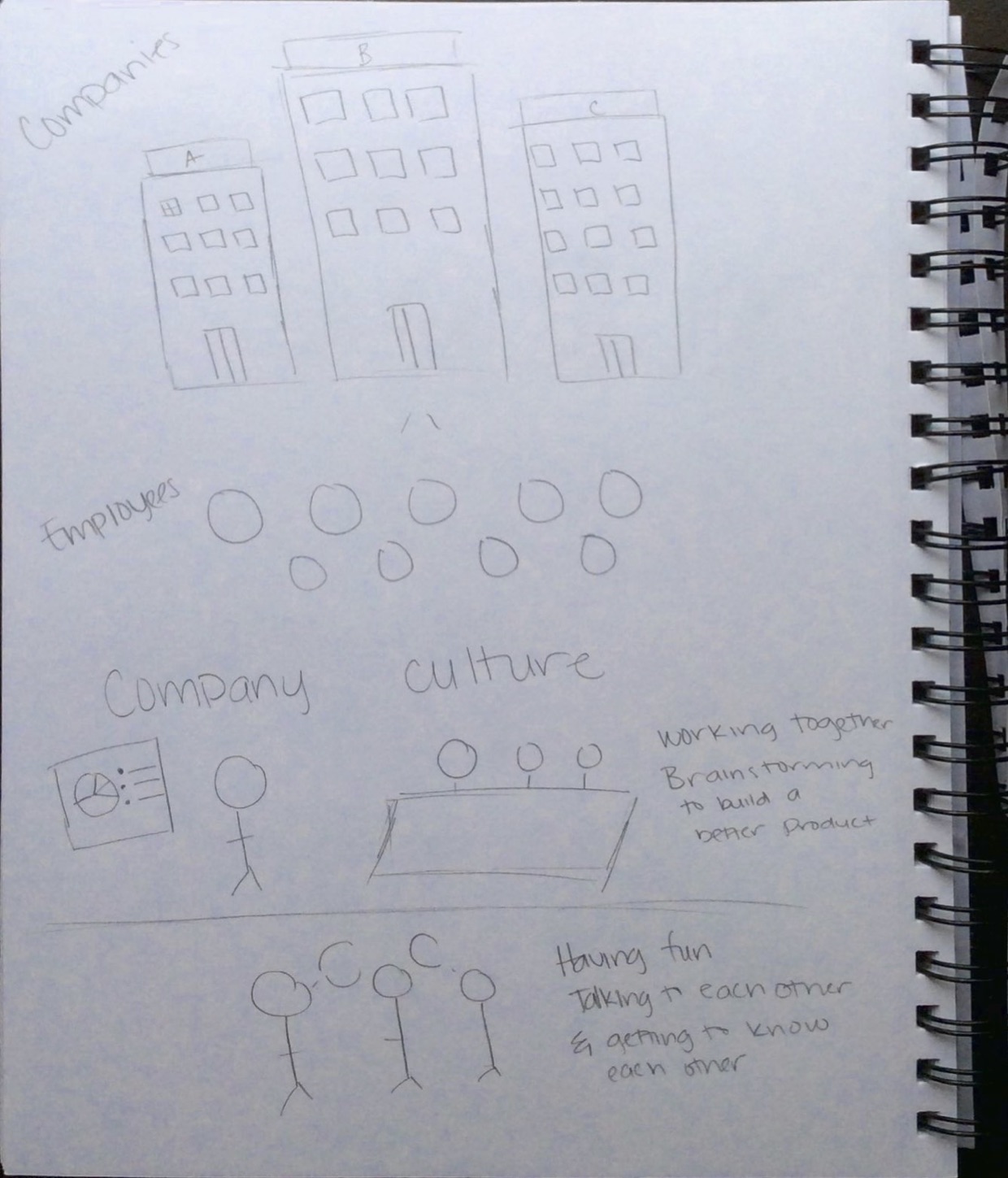
The beginning of this journey into International User Experience. I look forward to what this class has to uncover when it comes to global UX.
In Class Activity 1: Time – How We Represent It

In Class Activity 2: REVERSE ENGINEER (Z bar)
What sort of convention (legal, safety, etc.) do you see related to or connected with it?
What does it tell you about the business in that culture or country?
What does it tell you about the standards or value in that culture or country?
What kinds of assumptions does the artifact make about its audience?
What literacy skills are required by the audience?
In class activity 3: Comparing Cultural Values


“UX starts with understanding the users, but it’s not enough to just do a quick usability test or a few interviews, ticking off an item on a list by rote. We learned that doing user research right means putting your assumptions on the table and doing the work to either support or debunk them. It means taking the time to be open, to listen for the nuances of cultural perspectives. And it means helping all team members understand the messages of the research.” Global UX, Ch. 1
The above quote resonated with me and reminded me of my summer internship experience where I had to advocate for the users and trying to get my team members to understand my findings and recommendations based on the research. There was one PM who was set in his ways and what he wanted to hear. When I presented something that contradicted his assumption, he would fight back with a piece of information that somewhat supported his assumption. But I had to remind him that we want to create features that best fit our users’ needs and what he wants to create is not it at the moment. By the end of summer, this PM became a huge user research advocate.
“Perhaps thinking globally starts by simply experiencing more of the world.” Global UX, Ch. 2
This quote makes me feel like maybe I’m already a little bit of a global person due to my parents’ love for traveling and taking my brothers and I on family vacations around the U.S. and Asia. In retrospect, I very much am grateful for all these vacations even when I may not have enjoyed them as much as a child.
“Any large-scale human cooperation – whether a modern state, a medieval church, an ancient city or an archaic tribe – is rooted in common myths that exist only in people’s collective imagination.” Harrari, “The Tree of Knowledge”
I never thought of it like this that things like religion, government, cities, are all based on our collective imagination.
Reading the section about the new model for open innovation reminded me of what Lyft has done recently for their autonomous vehicle movement. When I was interviewing for their UX research internship position, they sent me many articles to read, and a few of the articles were about their belief and work in autonomous vehicles which led them to create an open platform, and the section about the new model for open innovation in chapter 2 reminded me about this.
https://take.lyft.com/open-platform/
The purpose of the open platform is for them to have a way they can collaborate with partners around the world to create a safe autonomous vehicle ride with the data collected from around the world because they believe autonomous vehicles are the future.
The part about being able to be a global person even without traveling outside of our country intrigued me. I like the idea that I can become a global thinker without having to travel all over the world.


 Hannah's Process Book
